
Composition Lessons
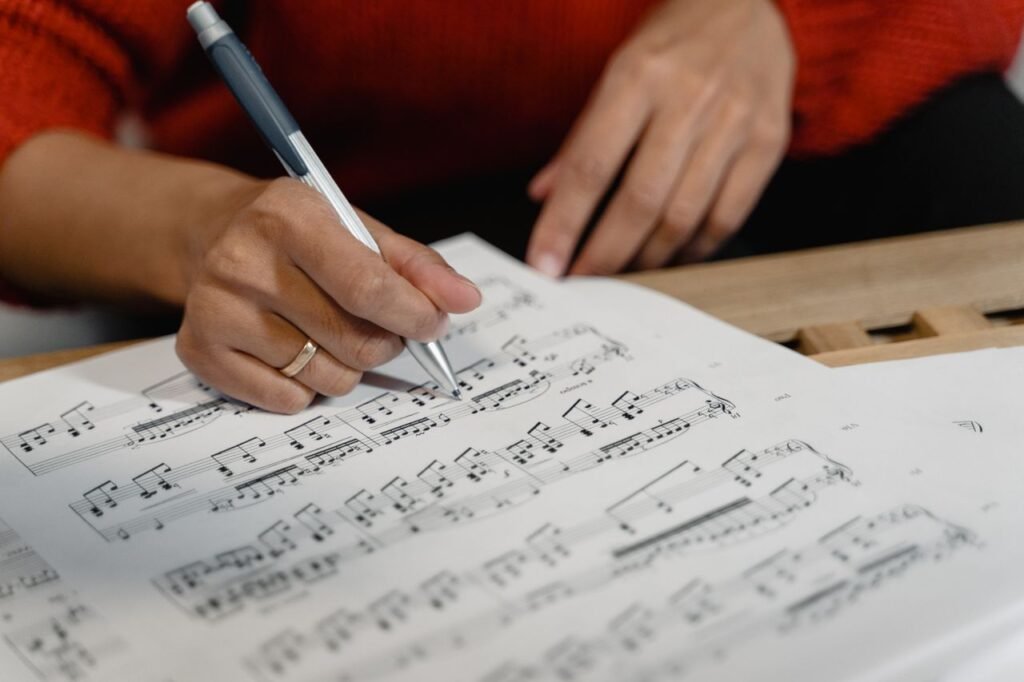
Discover Your Own Creative Voice – Composition helps learners explore their imagination and express ideas through music. Students gain confidence as they develop a personal style and learn to communicate their emotions through musical ideas and sound.
Build Strong Musical Understanding – Writing music deepens a student’s grasp of melody, harmony, rhythm, and structure. This understanding strengthens performance skills on any instrument and makes learning new pieces easier.
Develop Problem‑Solving and Critical Thinking – Composing involves making choices, experimenting, and refining ideas. Students naturally build resilience, focus, and analytical thinking as they shape their musical creations.
Improve Listening and Aural Awareness – Learners become more attentive listeners, noticing details in texture, dynamics, and musical patterns. This heightened awareness supports better playing, singing, and ensemble work.
Explore Any Style of Music – Whether a student loves classical, pop, film scores, or game music, composition lessons give them the tools to create in the genres they enjoy most.
Gain Independence and Confidence – Completing a piece of music, even a short one, gives students a powerful sense of achievement. They learn to trust their ideas and take pride in their progress.
Strengthen Skills for Modern Music Pathways –Composition supports songwriting, arranging, and digital production. Students gain skills that are valuable in today’s creative industries and personal music projects.
Enjoy a Lifelong Creative Outlet – Once students learn how to compose, they can create music at any stage of life. It becomes a lasting source of enjoyment, expression, and personal growth.